
Blockchain Settlement for Pharmacy Chains
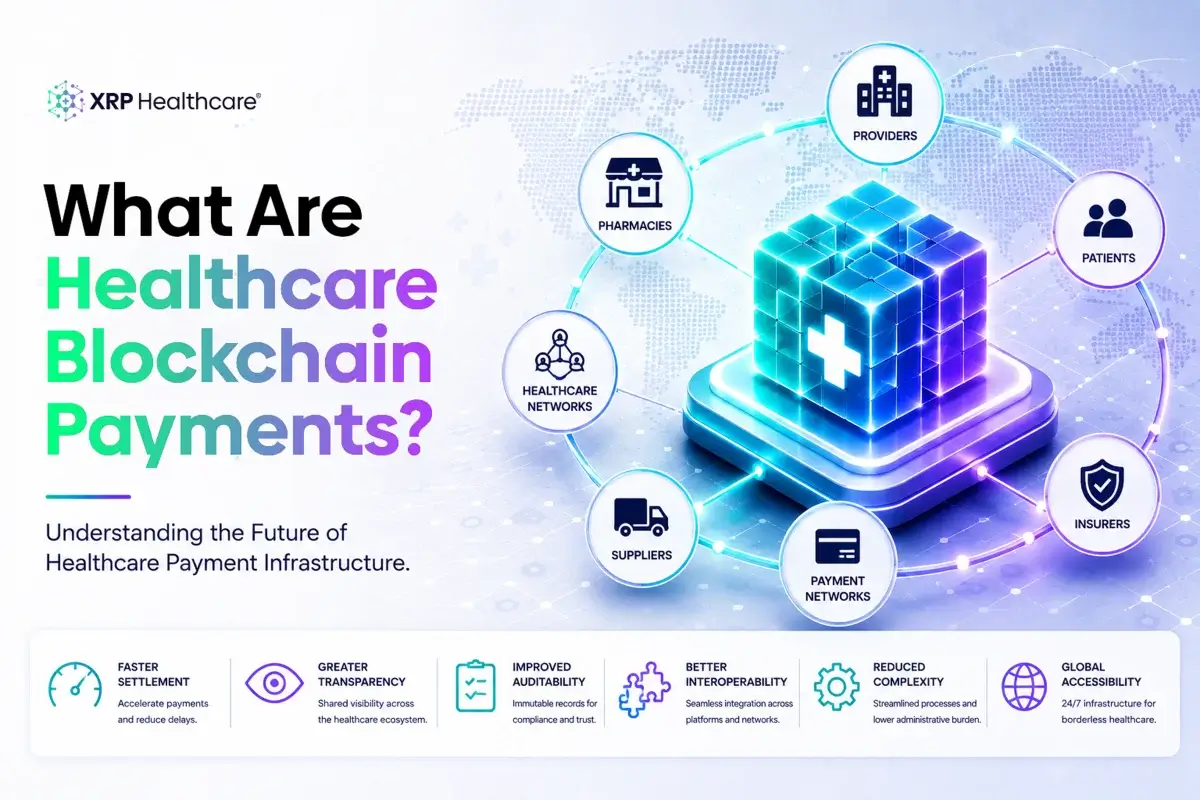
Healthcare payments are among the most complex financial processes in the world. Every day, transactions move between patients, pharmacies, healthcare providers, healthcare networks, suppliers, insurers and payment processors. These payment flows often involve multiple intermediaries, administrative processes and settlement delays.
As healthcare systems become increasingly digital, organisations are exploring technologies that can improve transparency, efficiency and interoperability. One technology receiving growing attention is blockchain. Healthcare blockchain payments use distributed ledger technology to support payment settlement, transaction verification and value transfer across healthcare ecosystems.
This guide explains what healthcare blockchain payments are, how they work, their benefits, limitations and why they are becoming increasingly important in modern healthcare infrastructure.
What Are Healthcare Blockchain Payments?
Healthcare blockchain payments are payment systems that use blockchain or distributed ledger technology to record, verify and settle transactions.
Unlike traditional payment systems that rely heavily on centralised databases and multiple intermediaries, blockchain-based systems maintain a shared ledger across participating networks.
This allows participants to access a common transaction record while maintaining transparency and auditability.
Healthcare blockchain payments may support:
- Pharmacy chain payments
- Healthcare provider settlement
- Healthcare supplier payments
- Cross-border healthcare transactions
- Healthcare commerce systems
- Digital health platform payments
- Healthcare rewards infrastructure
- Healthcare payment interoperability
The goal is to create more efficient and transparent payment infrastructure.
To understand the broader ecosystem, explore Healthcare Blockchain Payments.
How Does Blockchain Technology Work?
Blockchain technology operates through a distributed ledger.
Instead of storing transaction records in a single location, copies of the ledger exist across multiple participants within the network.
Each transaction is recorded, validated and added to the ledger in chronological order.
This creates a transparent transaction history that cannot easily be altered.
Key characteristics include:
- Distributed record keeping
- Transparent transaction history
- Continuous operation
- Interoperability
- Shared visibility
- Secure verification
These characteristics make blockchain attractive for payment infrastructure.
Why Healthcare Payment Infrastructure Matters
Healthcare ecosystems involve many participants.
Examples include:
- Patients
- Pharmacies
- Healthcare providers
- Healthcare networks
- Medical suppliers
- Insurers
- Technology platforms
- Financial institutions
Each participant may interact with multiple payment systems.
As complexity increases, infrastructure becomes increasingly important.
Efficient payment infrastructure can help support:
- Faster settlement
- Better interoperability
- Reduced administrative burden
- Greater transparency
- Improved operational efficiency
Challenges Facing Traditional Healthcare Payment Systems
Many healthcare payment systems still rely on processes developed decades ago.
Multiple Intermediaries
Payments often move through several organisations before settlement occurs.
Reconciliation Delays
Transaction matching and verification can create operational complexity.
Cross-Border Friction
International healthcare payments frequently involve currency conversion and settlement delays.
Limited Transparency
Participants may not always have real-time visibility into transaction status.
Administrative Costs
Complex payment infrastructure often increases operating costs.
These challenges have encouraged exploration of blockchain-based alternatives.
Potential Benefits of Healthcare Blockchain Payments
Healthcare blockchain payments are often discussed because of several potential advantages.
Faster Settlement
Modern blockchain networks can process transactions more efficiently than some traditional systems.
Greater Transparency
Participants can access shared transaction records.
Improved Auditability
Transaction histories remain accessible and traceable.
Better Interoperability
Blockchain systems may support value exchange between multiple platforms.
Reduced Complexity
Infrastructure can be streamlined through shared settlement layers.
Global Accessibility
Some blockchain networks operate continuously across borders.
Healthcare Blockchain Payment Use Cases
Healthcare blockchain payments can potentially support multiple use cases.
Pharmacy Chain Payments
Payment infrastructure connecting pharmacies, wholesalers and suppliers. Learn more about Blockchain Settlement for Pharmacy Chains. https://pharmacychain.co.uk/
Healthcare Provider Settlement
Settlement between healthcare organisations and service providers.
Cross-Border Healthcare Transactions
International healthcare commerce and payment flows.
Healthcare Commerce Networks
Infrastructure supporting healthcare-related purchases and transactions.
Digital Health Platforms
Payment systems supporting healthcare applications and digital services.
Rewards and Incentive Systems
Infrastructure supporting engagement-based healthcare ecosystems.
Healthcare Blockchain Payments and Transparency
Transparency remains one of the most commonly cited benefits of blockchain technology. Distributed ledgers allow transaction records to be viewed and verified by authorised participants.
Potential advantages include:
- Improved visibility
- Reduced reconciliation disputes
- Better operational clarity
- More efficient reporting
Transparency can be particularly valuable in complex healthcare payment environments.
Healthcare Blockchain Payments and Interoperability
Modern healthcare systems often involve many independent platforms. Interoperability refers to the ability of systems to exchange information and value efficiently.
Blockchain-based infrastructure may support:
- Multi-platform integration
- Cross-system settlement
- Shared payment frameworks
- Efficient value transfer
This is one reason blockchain continues to attract attention from healthcare technology innovators. For additional insights, visit Healthcare Blockchain Payments.
The Future of Healthcare Blockchain Payments
Healthcare blockchain payments remain an evolving area of financial and healthcare technology. Future developments may include:
- Greater automation
- Enhanced interoperability
- Expanded digital health ecosystems
- Increased payment transparency
- More efficient settlement infrastructure
As healthcare systems continue to modernise, blockchain-based payment infrastructure is likely to remain an important area of innovation.
Conclusion
Healthcare blockchain payments use distributed ledger technology to support payment settlement, transparency and interoperability within healthcare ecosystems. By providing shared transaction infrastructure, blockchain technology may help address challenges associated with traditional healthcare payment systems.
As healthcare becomes increasingly digital and globally connected, healthcare blockchain payments are expected to remain an important area of development for pharmacies, providers, healthcare networks and technology platforms. Explore the wider ecosystem through Healthcare Blockchain Payments.
Frequently Asked Questions
What are healthcare blockchain payments?
Healthcare blockchain payments use distributed ledger technology to facilitate payment settlement and value transfer within healthcare ecosystems.
Why are healthcare blockchain payments important?
They may improve transparency, interoperability and payment efficiency across healthcare systems.
How does blockchain support healthcare payments?
Blockchain provides distributed transaction records, shared visibility and settlement infrastructure.
Can healthcare blockchain payments support pharmacy chains?
Yes. Pharmacy payment infrastructure is one potential use case for blockchain-based settlement systems.
What is healthcare payment interoperability?
Healthcare payment interoperability refers to the ability of systems and participants to exchange value efficiently across different platforms and networks.
Are healthcare blockchain payments replacing traditional payment systems?
Blockchain payment systems are currently evolving alongside traditional infrastructure rather than completely replacing it.
Related Articles
Healthcare Blockchain Payments
Coming Soon
- How Blockchain Is Transforming Healthcare Payments
- Why Healthcare Payment Systems Need Greater Transparency
- Blockchain vs Traditional Healthcare Payment Systems
- The Future of Healthcare Blockchain Payments