
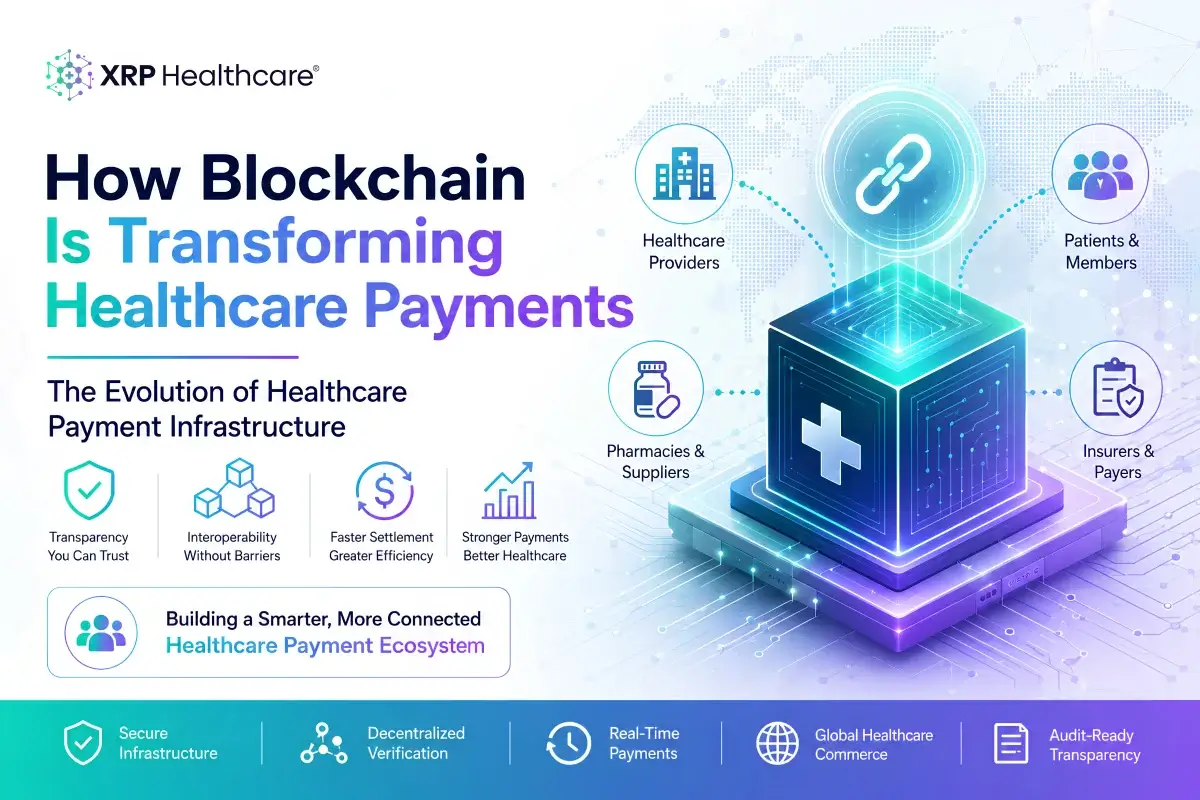
Healthcare payment systems have evolved significantly over the past several decades. However, many healthcare organisations still rely on infrastructure that was originally designed long before digital healthcare ecosystems became widespread. As healthcare becomes increasingly connected, organisations are seeking payment systems that can support greater transparency, interoperability and operational efficiency.
Blockchain technology has emerged as one of the most discussed innovations in healthcare payment infrastructure. From pharmacy chains and healthcare providers to healthcare suppliers and digital health platforms, blockchain is increasingly being explored as a framework for modernising how healthcare payments are processed and settled. Healthcare organisations exploring Healthcare Blockchain Payments are increasingly evaluating blockchain infrastructure as part of broader digital transformation strategies.
Why Healthcare Payment Systems Are Changing
Healthcare payment systems are under pressure to support:
- Growing healthcare networks
- Global healthcare commerce
- Cross-border transactions
- Digital healthcare services
- Real-time payment expectations
- Increased operational efficiency
Traditional payment systems often involve multiple participants, manual reconciliation and settlement delays. As healthcare ecosystems continue to expand, infrastructure requirements become more complex.
What Makes Blockchain Different?
Blockchain technology introduces a different approach to transaction processing. Instead of relying solely on centralised systems, blockchain uses distributed ledgers that record and verify transactions across a network.
Key characteristics include:
- Shared transaction visibility
- Distributed verification
- Continuous operation
- Enhanced transparency
- Improved interoperability
- Efficient settlement infrastructure
These characteristics make blockchain particularly relevant for healthcare payment applications. For organisations researching Healthcare Blockchain Payments, these capabilities offer potential advantages over traditional payment architectures.
Improving Transparency in Healthcare Payments
Transparency remains one of the most commonly cited advantages of blockchain infrastructure. Traditional payment systems may require multiple records, reconciliation processes and manual verification.
Blockchain infrastructure can provide:
- Shared transaction records
- Improved auditability
- Better payment visibility
- Reduced reconciliation complexity
- Enhanced reporting capabilities
As healthcare organisations continue to seek operational efficiencies, transparency becomes increasingly valuable.
Supporting Healthcare Payment Interoperability
Modern healthcare ecosystems involve multiple independent systems.
Examples include:
- Pharmacy management systems
- Healthcare provider platforms
- Supplier networks
- Payment systems
- Digital healthcare applications
Interoperability allows these systems to exchange information and value more efficiently. Blockchain infrastructure is often discussed as a potential framework for improving interoperability across complex healthcare environments. To better understand the foundations of blockchain-enabled healthcare transactions, see What Are Healthcare Blockchain Payments?
Faster Settlement and Operational Efficiency
Settlement speed remains a major consideration for healthcare organisations. Traditional payment systems may involve delays caused by:
- Banking schedules
- Cross-border processes
- Multiple intermediaries
- Reconciliation requirements
Blockchain-based infrastructure may support more efficient settlement processes, helping organisations improve operational workflows and liquidity management.
Blockchain and Pharmacy Payment Infrastructure
Pharmacy chains represent one of the most practical examples of healthcare payment complexity.
Every day, pharmacies interact with:
- Suppliers
- Distributors
- Logistics providers
- Healthcare networks
- Branch locations
- International procurement partners
Efficient payment infrastructure plays an important role in maintaining inventory flow and operational continuity. This is one reason blockchain settlement infrastructure continues to attract interest within pharmacy sectors.
Healthcare Blockchain Payments in Practice
Healthcare blockchain payments may support several real-world applications.
Pharmacy Chain Settlement
Improving payment flows between branches, suppliers and distributors.
Cross-Border Healthcare Commerce
Supporting international healthcare transactions.
Healthcare Provider Payments
Facilitating settlement between healthcare organisations.
Healthcare Rewards Ecosystems
Supporting engagement-driven healthcare participation.
Digital Health Platforms
Enabling payment functionality within healthcare applications.
The Role of Healthcare Payment Infrastructure
Technology alone does not transform healthcare payments. Infrastructure is equally important. Modern healthcare payment infrastructure must support:
- Reliability
- Transparency
- Scalability
- Interoperability
- Settlement efficiency
Blockchain is increasingly being explored as one potential infrastructure layer capable of supporting these objectives. As adoption grows, Healthcare Blockchain Payments continue to be a major discussion point within healthcare technology and payment innovation sectors.
Challenges and Considerations
While blockchain technology offers potential advantages, implementation remains an evolving process. Healthcare organisations must consider:
- Regulatory requirements
- System integration
- Operational governance
- User adoption
- Infrastructure design
Successful implementation requires thoughtful planning and alignment with existing healthcare workflows.
The Future of Healthcare Payments
Healthcare payment systems are expected to continue evolving. Future developments may include:
- Greater automation
- Improved interoperability
- Enhanced transparency
- Faster settlement infrastructure
- Expanded healthcare commerce networks
- Increased digital healthcare integration
Blockchain technology is likely to remain a significant part of discussions surrounding the future of healthcare payment infrastructure.
Conclusion
Blockchain technology is transforming healthcare payments by introducing new approaches to transparency, interoperability and settlement infrastructure. As healthcare ecosystems become increasingly digital and interconnected, organisations continue exploring how blockchain-based systems may improve operational efficiency and payment processes.
While implementation continues to evolve, healthcare blockchain payments are expected to remain an important area of innovation for pharmacies, healthcare providers and healthcare technology platforms.
Frequently Asked Questions
How is blockchain transforming healthcare payments?
Blockchain introduces improved transparency, interoperability and settlement infrastructure for healthcare payment systems.
Why is healthcare payment infrastructure important?
Healthcare payment infrastructure supports value transfer between pharmacies, providers, suppliers and healthcare organisations.
Can blockchain improve payment transparency?
Blockchain infrastructure may improve transaction visibility and auditability through distributed ledger technology.
What role does interoperability play in healthcare payments?
Interoperability allows systems and participants to exchange value more efficiently across networks.
Why are pharmacy chains exploring blockchain settlement?
Blockchain settlement may help improve efficiency, visibility and operational continuity across pharmacy payment systems.
Are healthcare blockchain payments replacing traditional systems?
Healthcare blockchain payments are currently evolving alongside traditional payment infrastructure rather than fully replacing it.
Related Articles
Coming Soon
- Why Healthcare Payment Systems Need Greater Transparency
- Blockchain vs Traditional Healthcare Payment Systems
- The Future of Healthcare Blockchain Payments